Brought to you by Salem Funeral and Cremation Services
Mary Read Knott
Winston-Salem, North Carolina
August 28, 1939 - June 27, 2026
Share a memory
Mary Read Knott Obituary
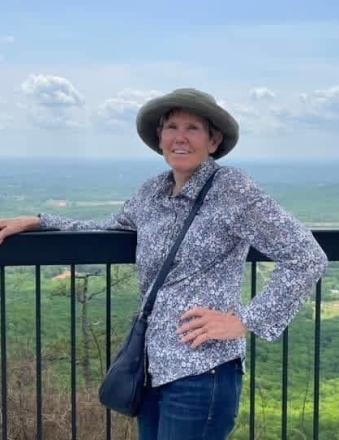
Mary Read Knott died on June 27, 2026 at the age of 86. Mary was always called Elen and she spent decades answering the phone “Knott here.” But for someone known by an alias, who seemed to declare her absence when called, she knew exactly who she was. Serenely independent, Elen met the world with confidence and expected to have fun. She had particularly keen students of these habits in her daughters and granddaughters.
Born in Decatur, Illinois on August 28, 1939, Elen grew up with a brother, George, and sister, Jacqueline (Jaq). She attended Oberlin College and graduated from the University of Illinois, where she later went to library school. She spent time in Germany nannying for her uncle and aunt and then spent a semester at a Frankfurt university.
The time abroad gave Elen a taste for adventure. At 23, she left for the Philippines to serve two years as a Peace Corps volunteer. She and her partner Louise lived on the southern island of Mindanao; Manila was “700 miles and many days away.” She documented her Philippines service in a long string of letters home. The U.S. Postal Service’s spotty record in recent years rankled because she remembered that her notes from the early 1960s took less than a week to travel from her remote village of Bula to central Illinois.
In one letter, Elen wrote of taking a short flight from one island to another for a dance. She and Louise had been “shaken around like a maraca” and endured a thunderstorm that nearly kept them from flying back to their town. They weren’t afraid of shaking like a bean in a tiny plane, nor of returning to the U.S. the long way. She and Louise aimed west in the spring of 1964, wending their way through Vietnam, Cambodia, Thailand, Nepal, India, Pakistan, Afghanistan, Egypt, Jordan, Lebanon, Israel, Turkey, Greece, Italy, and France. Saigon, she wrote in a postcard, was “magnificently beautiful” and its people had good style. But, “The war goes on ten miles down the road. We can see the artillery at night.” In Kathmandu, Elen and Louise listened to a group in a temple play a harmonium, cymbals, and drums and then treated the band to a round of “She’ll Be Coming Round the Mountain,” which they “dug to the fullest.”
Elen and Louise unexpectedly founded the second public school library in their province, the Philippines’ largest. It was a scrappy enterprise. To glue pockets into books for loan cards, they made flour and water paste and enlisted their pupils. “The children became so bogged down in the paste,” Elen wrote, “that we were forced to call work stoppages and send the children en masse to the water pump for major renovation.” It proved a formative experience and she pondered her future on the long trip home. She had focused on “the prospects of librarianism,” she wrote from Istanbul, though seeing some of the most stunning examples of art and architecture in the world had made her consider a shift to art history. Getting books and information into people’s hands prevailed and she went to library school at the University of Illinois.
Had Elen switched to art history, she might have joined Robert Knott across campus. While getting her Master’s, she met Bob, who was pursuing his in art history. Illinois was not the first place they had crossed paths. At precisely the same time that Elen had traveled through the Middle East, Bob was touring youth music festivals in the same countries, playing in a folk band with Jim Croce and others. Elen and Bob married in December of 1966 and took a honeymoon trip to Moline, Illinois to visit the John Deere headquarters. The architecture enthusiasts wanted to see the Eero Saarinen-designed building opened two years earlier. They revisited Turkey in 1967, and travel helped define their lives together; they prioritized thoughtful, wide-ranging exploration. Some places held enduring interest, as they returned multiple times to London and Venice and Mexico.
Elen spent 30 years working in academic libraries. While Bob got his PhD at the University of Pennsylvania, she worked in the university library. And when they moved to Boston, she worked at MIT’s library. They moved to Winston-Salem, North Carolina in 1975, where Elen served as head of reference at Wake Forest University’s Z. Smith Reynolds Library and Bob taught in the Art and Art History Department.
Elen and Bob had Sara (Nichols) in 1970 and Hannah (Rogers) in 1972. The family traveled together, camped together, and spent summers together in Lubec, Maine, which they had been introduced to through Oberlin and Boston friends. Later, Sara and Bucky had Daisy and Ella and Hannah and Tom had Dinah and Juno. This younger generation found much to learn from their E, including when they needed major renovation.
Elen had impeccable good sense and took it where it pointed her, speaking her mind freely. Sometimes that led to confrontation, as when she had a tugging match over a cookie tin with a raccoon in Maine’s north woods. But she knew how to pick her battles. When she met the Aga Khan on her travels and he absentmindedly pocketed her sunglasses, she politely held her tongue. She taught her granddaughters to explore, seek interesting things, and regard rules with healthy skepticism. And she modeled for them a distinctive relationship with language. On finding a good place to sit or a view to admire, she would say, “now, where’s the hot hors d’oeuvres man?” A young person showing her handsome chestnuts they had gathered would be told “That’s like money in the bank!”
Elen relished the world around her: the views, the shiny chestnuts, and everything else nature had to show. Writing from Peshawar in 1964, she said “We’re not getting bored by any means but it’s amazing how much better scenes of natural beauty wear than museums and monuments.” Spending time in Downeast Maine across half a century, she never tired of the craggy shoreline, spruce forests, and fish-hogging bald eagles. She loved Eagle’s Nest Camp because it cultivated in young people the devotion she felt to the outdoors and she served cheerfully on the Eagle’s Nest board for decades. In Winston-Salem, she trained as a master gardener and worked in the gardens at Tanglewood while paying attention to her own yard and garden with Bob.
Some of Elen’s closest friendships crystallized through shared celebrations of the natural world, including zany solstice festivals over the years. Whether she was donning moose bones to welcome the sun with a group or sharing conversation on the porch, Elen was a dedicated friend to many in Winston-Salem, Lubec, and beyond. The correspondence habits she honed in the Peace Corps stuck with her; a stream of letters and cards issued from her desk. She let her granddaughters and sons-in-law know she appreciated return letters and trained them to always include the date. As much as she cultivated her own irreverence, she appreciated it in others too. Elen was quick to acknowledge how much could be learned from people and kept an open mind, while reserving the right to pass judgment.
The family suggests donations to two organizations that Elen consistently supported: Eagle’s Nest Foundation (Pisgah Forest, North Carolina) and the Tides Institute (Eastport, Maine).
To send flowers to the family or plant a tree in memory of Mary, please visit our floral store.
Mary Read Knott died on June 27, 2026 at the age of 86. Mary was always called Elen and she spent decades answering the phone “Knott here.” But for someone known by an alias, who seemed to declare her absence when called, she knew exactly who she was. Serenely independent, Elen met the world with confidence and expected to have fun. She had particularly keen students of these habits in her daughters and granddaughters.
Born in Decatur, Illinois on August 28, 1939, Elen grew up with a brother, George, and sister, Jacqueline (Jaq). She attended Oberlin College and graduated from the University of Illinois, where she later went to library school. She spent time in Germany nannying for her uncle and aunt and then spent a semester at a Frankfurt university.
The time abroad gave Elen a taste for adventure. At 23, she left for the Philippines to serve two years as a Peace Corps volunteer. She and her partner Louise lived on the southern island of Mindanao; Manila was “700 miles and many days away.” She documented her Philippines service in a long string of letters home. The U.S. Postal Service’s spotty record in recent years rankled because she remembered that her notes from the early 1960s took less than a week to travel from her remote village of Bula to central Illinois.
In one letter, Elen wrote of taking a short flight from one island to another for a dance. She and Louise had been “shaken around like a maraca” and endured a thunderstorm that nearly kept them from flying back to their town. They weren’t afraid of shaking like a bean in a tiny plane, nor of returning to the U.S. the long way. She and Louise aimed west in the spring of 1964, wending their way through Vietnam, Cambodia, Thailand, Nepal, India, Pakistan, Afghanistan, Egypt, Jordan, Lebanon, Israel, Turkey, Greece, Italy, and France. Saigon, she wrote in a postcard, was “magnificently beautiful” and its people had good style. But, “The war goes on ten miles down the road. We can see the artillery at night.” In Kathmandu, Elen and Louise listened to a group in a temple play a harmonium, cymbals, and drums and then treated the band to a round of “She’ll Be Coming Round the Mountain,” which they “dug to the fullest.”
Elen and Louise unexpectedly founded the second public school library in their province, the Philippines’ largest. It was a scrappy enterprise. To glue pockets into books for loan cards, they made flour and water paste and enlisted their pupils. “The children became so bogged down in the paste,” Elen wrote, “that we were forced to call work stoppages and send the children en masse to the water pump for major renovation.” It proved a formative experience and she pondered her future on the long trip home. She had focused on “the prospects of librarianism,” she wrote from Istanbul, though seeing some of the most stunning examples of art and architecture in the world had made her consider a shift to art history. Getting books and information into people’s hands prevailed and she went to library school at the University of Illinois.
Had Elen switched to art history, she might have joined Robert Knott across campus. While getting her Master’s, she met Bob, who was pursuing his in art history. Illinois was not the first place they had crossed paths. At precisely the same time that Elen had traveled through the Middle East, Bob was touring youth music festivals in the same countries, playing in a folk band with Jim Croce and others. Elen and Bob married in December of 1966 and took a honeymoon trip to Moline, Illinois to visit the John Deere headquarters. The architecture enthusiasts wanted to see the Eero Saarinen-designed building opened two years earlier. They revisited Turkey in 1967, and travel helped define their lives together; they prioritized thoughtful, wide-ranging exploration. Some places held enduring interest, as they returned multiple times to London and Venice and Mexico.
Elen spent 30 years working in academic libraries. While Bob got his PhD at the University of Pennsylvania, she worked in the university library. And when they moved to Boston, she worked at MIT’s library. They moved to Winston-Salem, North Carolina in 1975, where Elen served as head of reference at Wake Forest University’s Z. Smith Reynolds Library and Bob taught in the Art and Art History Department.
Elen and Bob had Sara (Nichols) in 1970 and Hannah (Rogers) in 1972. The family traveled together, camped together, and spent summers together in Lubec, Maine, which they had been introduced to through Oberlin and Boston friends. Later, Sara and Bucky had Daisy and Ella and Hannah and Tom had Dinah and Juno. This younger generation found much to learn from their E, including when they needed major renovation.
Elen had impeccable good sense and took it where it pointed her, speaking her mind freely. Sometimes that led to confrontation, as when she had a tugging match over a cookie tin with a raccoon in Maine’s north woods. But she knew how to pick her battles. When she met the Aga Khan on her travels and he absentmindedly pocketed her sunglasses, she politely held her tongue. She taught her granddaughters to explore, seek interesting things, and regard rules with healthy skepticism. And she modeled for them a distinctive relationship with language. On finding a good place to sit or a view to admire, she would say, “now, where’s the hot hors d’oeuvres man?” A young person showing her handsome chestnuts they had gathered would be told “That’s like money in the bank!”
Elen relished the world around her: the views, the shiny chestnuts, and everything else nature had to show. Writing from Peshawar in 1964, she said “We’re not getting bored by any means but it’s amazing how much better scenes of natural beauty wear than museums and monuments.” Spending time in Downeast Maine across half a century, she never tired of the craggy shoreline, spruce forests, and fish-hogging bald eagles. She loved Eagle’s Nest Camp because it cultivated in young people the devotion she felt to the outdoors and she served cheerfully on the Eagle’s Nest board for decades. In Winston-Salem, she trained as a master gardener and worked in the gardens at Tanglewood while paying attention to her own yard and garden with Bob.
Some of Elen’s closest friendships crystallized through shared celebrations of the natural world, including zany solstice festivals over the years. Whether she was donning moose bones to welcome the sun with a group or sharing conversation on the porch, Elen was a dedicated friend to many in Winston-Salem, Lubec, and beyond. The correspondence habits she honed in the Peace Corps stuck with her; a stream of letters and cards issued from her desk. She let her granddaughters and sons-in-law know she appreciated return letters and trained them to always include the date. As much as she cultivated her own irreverence, she appreciated it in others too. Elen was quick to acknowledge how much could be learned from people and kept an open mind, while reserving the right to pass judgment.
The family suggests donations to two organizations that Elen consistently supported: Eagle’s Nest Foundation (Pisgah Forest, North Carolina) and the Tides Institute (Eastport, Maine).
To send flowers to the family or plant a tree in memory of Mary, please visit our floral store.
Events
No services will be held
You can still show your support by sending flowers directly to the family, or plant a tree in memory of Mary Read Knott.Visit the Tribute Store