Share a memory
Henry Ridgely Horsey Obituary
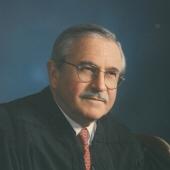
Henry Ridgely Horsey, former justice of the Delaware Supreme Court, died peacefully at home in St. Louis on March 3, 2016. He was 91. The cause of death was congestive heart failure.
Justice Horsey was born October 18, 1924, at Beebe Hospital in Lewes, Del., to the late Harold Wolfe Horsey and Philippa Elizabeth Ridgely Horsey. During his lifetime, Justice Horsey applied his intellect and wisdom to the practice of law, rulings on corporate governance, and advocacy for environmental protection and historic preservation. He served on the Delaware Supreme Court from 1978 through 1994. Many of his opinions became landmark decisions, most notably his opinion in Riley v. State, which became the format for the seminal holding by the U.S. Supreme Court in the landmark 1986 case Batson v. United States, which prohibits attorneys from removing prospective jurors during jury selection in criminal proceedings based on race.
As a jurist and public servant, he continued a family tradition that spans 275 years. His Ridgely ancestors included Judge Nicholas Ridgely; his grandson Nicholas Ridgely the Younger, who served as Attorney General of Delaware from 1791 to 1801 and later as Chancellor from 1801 to 1830; Henry Moore Ridgely, the half-brother of Nicholas, who served as Delaware’s Representative in Congress and later as a United States Senator; Justice Horsey’s great grandfather, Edward Ridgely, a jurist and Secretary of State; and Justice Horsey’s grandmother, Mabel Lloyd Ridgely, president of the Delaware Women’s Suffrage Society, first president of the Delaware League of Women Voters, and noted preservationist who helped save the colonial Delaware State House.
Justice Horsey grew up in Dover, Del., and spent his summers swimming in the ocean and sailing on the bay in Rehoboth Beach, Del. In the 10th grade, he enrolled at the Loomis School in Windsor, Conn., where he graduated in 1943. Upon graduation, he was drafted into the U.S. Army. He served for three years during World War II, first in the Infantry and later in the Combat Engineers, with two years spent in the European theatre. He was honorably discharged in 1946 as a Sergeant and entered Harvard College followed by Harvard Law School, graduating in 1952.
Justice Horsey was admitted to the Delaware Bar in 1953 and practiced law in Wilmington, Del., at Berl, Potter and Anderson (now Potter, Anderson & Caroon) from 1953 to 1962. From 1962 until 1965, Justice Horsey served as a trust officer and Assistant Vice President of the Wilmington Trust Company. He then returned to the practice of law in Dover, where he joined the Delaware Attorney General’s office and operated a solo law practice. In 1969 he joined the Dover office of Morris, James, Hitchens & Williams, where he remained until 1978 when he was appointed to the Delaware Supreme Court. Justice Horsey brought to the Court an intellectual curiosity, a dedication to hard work, and an innate sense of fairness. He was known for his careful application of the English language, evidenced by the almost illegible pencilled notations on his long legal pads. Living in the 18th century family home situated within yards of the Supreme Court Building, it was not uncommon for the security guard to find Justice Horsey working at his desk in his robe and slippers.
Justice Horsey was an avid reader, writer, and student of history. He loved to sail, travel, and debate the politics of the day. His life work included helping preserve his ancestral home, which has been in the family since prior to the Revolutionary War. In 1989, he established the first protective sand dunes in Rehoboth Beach, despite resistance from the city. To this day, those dunes protect the beach communities and homes along the shore.
He was preceded in death by his sister Lloyd Horsey Scheller. He is survived by his seven children Henry Horsey, Edmond Horsey, Therese Seibert, Revell Horsey, Ridgely Biddle, Robert Horsey, and Elizabeth Horsey and 11 grandchildren; and his wife Linda George Horsey and her four children Amy George Rush, Mary Noël George, Martin George, and Anthony George and three grandchildren. Justice Horsey was previously married to Alexandra Leigh-Hunt, deceased, and Ann Baker Horsey of Dover.
A memorial service will be held at 11:30 a.m. on Saturday, April 2, at All Saints’ Church & St. George’s Chapel in Rehoboth Beach. A private interment will take place at Christ Church Dover. Memorial donations, which will support dune restoration and preservation along the Delaware coast, may be mailed to BMO Harris Bank, Justice Henry R. Horsey Memorial Fund, 700 Corporate Dr., St. Louis, MO 63105.
Henry Ridgely Horsey, former justice of the Delaware Supreme Court, died peacefully at home in St. Louis on March 3, 2016. He was 91. The cause of death was congestive heart failure.
Justice Horsey was born October 18, 1924, at Beebe Hospital in Lewes, Del., to the late Harold Wolfe Horsey and Philippa Elizabeth Ridgely Horsey. During his lifetime, Justice Horsey applied his intellect and wisdom to the practice of law, rulings on corporate governance, and advocacy for environmental protection and historic preservation. He served on the Delaware Supreme Court from 1978 through 1994. Many of his opinions became landmark decisions, most notably his opinion in Riley v. State, which became the format for the seminal holding by the U.S. Supreme Court in the landmark 1986 case Batson v. United States, which prohibits attorneys from removing prospective jurors during jury selection in criminal proceedings based on race.
As a jurist and public servant, he continued a family tradition that spans 275 years. His Ridgely ancestors included Judge Nicholas Ridgely; his grandson Nicholas Ridgely the Younger, who served as Attorney General of Delaware from 1791 to 1801 and later as Chancellor from 1801 to 1830; Henry Moore Ridgely, the half-brother of Nicholas, who served as Delaware’s Representative in Congress and later as a United States Senator; Justice Horsey’s great grandfather, Edward Ridgely, a jurist and Secretary of State; and Justice Horsey’s grandmother, Mabel Lloyd Ridgely, president of the Delaware Women’s Suffrage Society, first president of the Delaware League of Women Voters, and noted preservationist who helped save the colonial Delaware State House.
Justice Horsey grew up in Dover, Del., and spent his summers swimming in the ocean and sailing on the bay in Rehoboth Beach, Del. In the 10th grade, he enrolled at the Loomis School in Windsor, Conn., where he graduated in 1943. Upon graduation, he was drafted into the U.S. Army. He served for three years during World War II, first in the Infantry and later in the Combat Engineers, with two years spent in the European theatre. He was honorably discharged in 1946 as a Sergeant and entered Harvard College followed by Harvard Law School, graduating in 1952.
Justice Horsey was admitted to the Delaware Bar in 1953 and practiced law in Wilmington, Del., at Berl, Potter and Anderson (now Potter, Anderson & Caroon) from 1953 to 1962. From 1962 until 1965, Justice Horsey served as a trust officer and Assistant Vice President of the Wilmington Trust Company. He then returned to the practice of law in Dover, where he joined the Delaware Attorney General’s office and operated a solo law practice. In 1969 he joined the Dover office of Morris, James, Hitchens & Williams, where he remained until 1978 when he was appointed to the Delaware Supreme Court. Justice Horsey brought to the Court an intellectual curiosity, a dedication to hard work, and an innate sense of fairness. He was known for his careful application of the English language, evidenced by the almost illegible pencilled notations on his long legal pads. Living in the 18th century family home situated within yards of the Supreme Court Building, it was not uncommon for the security guard to find Justice Horsey working at his desk in his robe and slippers.
Justice Horsey was an avid reader, writer, and student of history. He loved to sail, travel, and debate the politics of the day. His life work included helping preserve his ancestral home, which has been in the family since prior to the Revolutionary War. In 1989, he established the first protective sand dunes in Rehoboth Beach, despite resistance from the city. To this day, those dunes protect the beach communities and homes along the shore.
He was preceded in death by his sister Lloyd Horsey Scheller. He is survived by his seven children Henry Horsey, Edmond Horsey, Therese Seibert, Revell Horsey, Ridgely Biddle, Robert Horsey, and Elizabeth Horsey and 11 grandchildren; and his wife Linda George Horsey and her four children Amy George Rush, Mary Noël George, Martin George, and Anthony George and three grandchildren. Justice Horsey was previously married to Alexandra Leigh-Hunt, deceased, and Ann Baker Horsey of Dover.
A memorial service will be held at 11:30 a.m. on Saturday, April 2, at All Saints’ Church & St. George’s Chapel in Rehoboth Beach. A private interment will take place at Christ Church Dover. Memorial donations, which will support dune restoration and preservation along the Delaware coast, may be mailed to BMO Harris Bank, Justice Henry R. Horsey Memorial Fund, 700 Corporate Dr., St. Louis, MO 63105.
Events
Service
Saturday, April 2, 2016
11:30 am
All Saints' Episcopal Church
18 Olive Ave Rehoboth Beach, DE 19971